


Call Us
888.433.2300

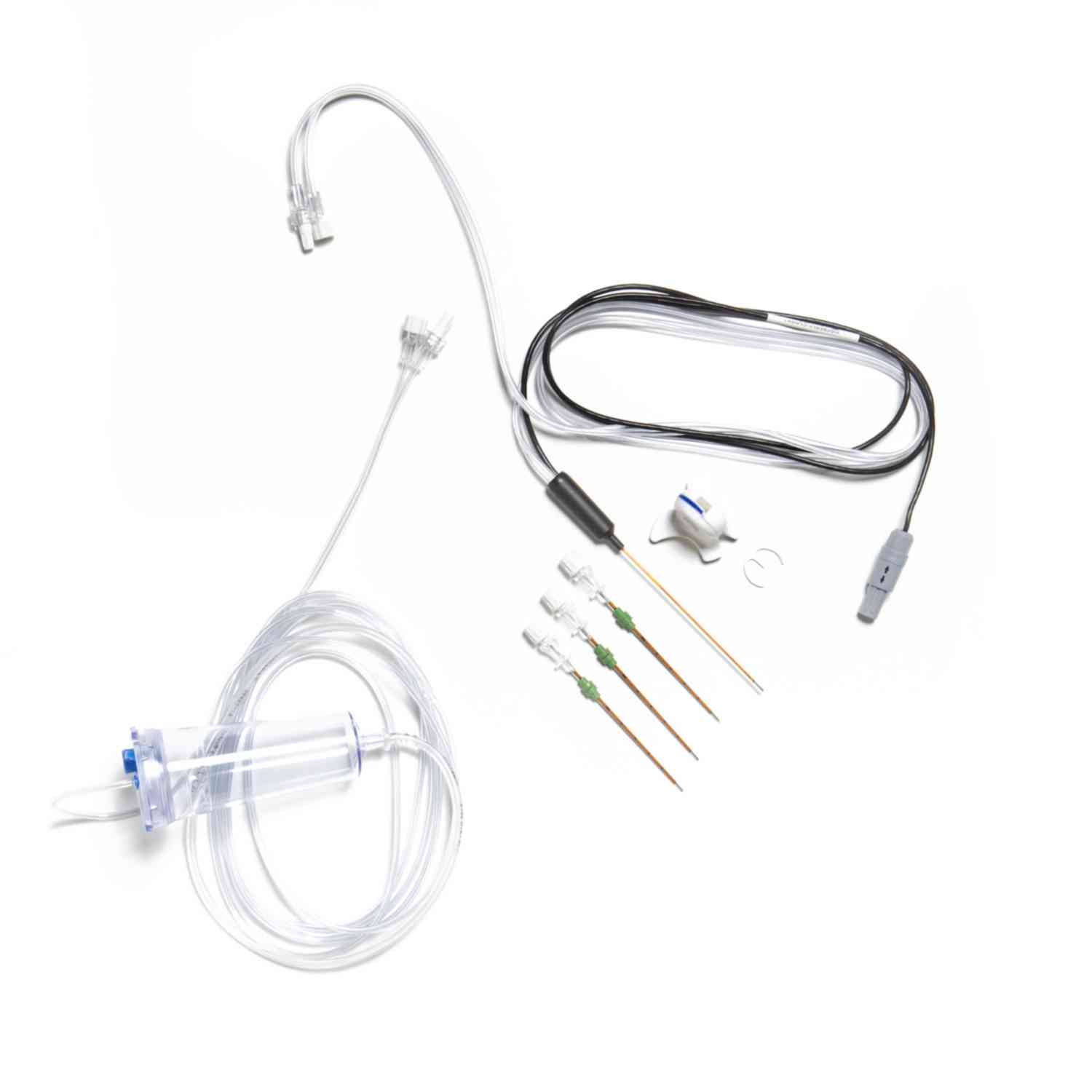


Description
The Avanos MCK3-17-75-4 is a COOLIEF Multi-Cooled Radiofrequency (RF) Kit*. Similar to the MCK2 you previously asked about, this "MCK3" configuration is an expanded kit designed for procedures requiring three simultaneous probes, allowing a clinician to treat three nerve sites at once.
Using three probes significantly reduces the total procedure time when treating areas with complex or multiple nerve paths, such as the knee or the sacroiliac (SI) joint.
The product code MCK3-17-75-4 provides the following specifications:
3-Probe Configuration (MCK3): Includes components to run three independent RF channels simultaneously.
17-Gauge Probe (17): The diameter of the probes/introducers.
75 mm Length (75): A shorter probe length compared to the 100 mm version, commonly used for more superficial targets like the genicular nerves in the knee.
4 mm Active Tip (4): The length of the non-insulated tip where the thermal energy is concentrated.
This kit comes sterile and is designed for single-use to ensure patient safety:
3 COOLIEF Cooled RF Probes:* High-performance electrodes that deliver energy while being internally cooled.
6 Fluid Delivery Introducers (FDI): Two for each probe. These specialized cannulas allow the physician to inject local anesthetic or saline without removing the probe, maintaining precise placement.
2 Fluid Tubing Kits: These connect to a peristaltic pump to circulate sterile water through the probes.
This specific kit is most frequently used for:
Knee Osteoarthritis: Targeting the superior medial, superior lateral, and inferior medial genicular nerves in one session.
Sacroiliac (SI) Joint Pain: Creating a "palisade" of lesions along the joint to block sensory input from multiple sacral lateral branches.
Procedural Efficiency: By using three probes instead of one or two, physicians can complete complex "cooled" ablation procedures up to 33% faster, reducing the time the patient is on the procedure table.