


Call Us
888.433.2300

Description
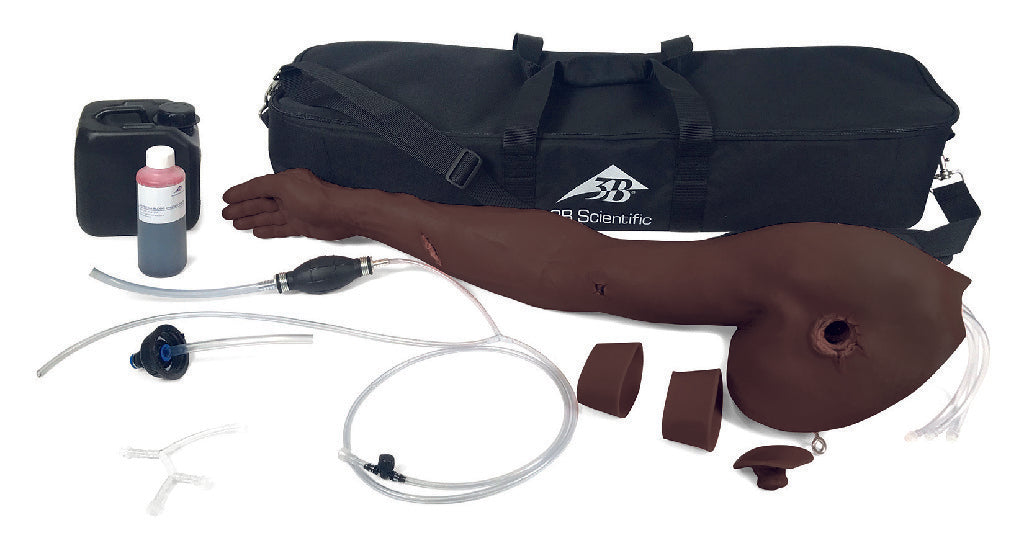
Realistic and Diverse Wound Patterns: The arm includes three distinct and traumatic wound types: a deep laceration or stab wound, a large-caliber gunshot wound with both an entry and exit, and a junctional wound in the shoulder area. These wounds can be covered with inserts to create a variety of training scenarios.
Authentic Bleeding System: The trainer features a manual blood pump system with a 2-liter reservoir. The pump can simulate both venous and arterial pulsatile bleeding, and the flow can be controlled by an instructor or trainee.
Direct, Tangible Feedback: A critical feature is the immediate feedback it provides. Bleeding will stop when a tourniquet is applied correctly or when wound packing is performed effectively, giving trainees tangible proof of a successful intervention.
Anatomically Accurate Design: The model is a realistic representation of an adult male arm with palpable bony landmarks and damaged vessels, which are critical for proper tourniquet and wound packing application. The skin is made of a durable, high-quality silicone material that provides a lifelike feel.
Portable and Field-Ready: The trainer is a standalone simulator that requires no batteries or external power. It is sturdy, easy to clean, and comes with a carrying strap, sandbag, and artificial blood concentrate for easy transport and setup in any location.
The Hemorrhage Control Arm Trainer is a vital tool for:
Tactical and First Responder Training: It's well-suited for military, law enforcement, and other first responders who need to practice life-saving skills under high-pressure scenarios.
Emergency Medical Services (EMS) and Paramedic Training: EMS students and professionals use the trainer to master rapid and effective hemorrhage control techniques in a pre-hospital setting.
"Stop the Bleed" Programs: This model is an ideal resource for public education programs that teach bystanders how to control severe bleeding in an emergency, as the direct feedback is a powerful teaching tool.
Medical and Trauma Training: Medical students and residents can use the model to practice critical trauma care skills before working with real patients.