


Call Us
888.433.2300


Description
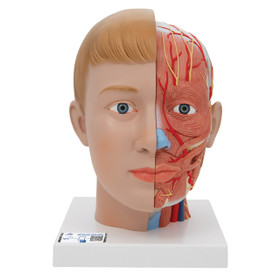
Detailed Anatomy: The model is a highly detailed replica of the human head and neck, with a focus on both superficial and internal structures. It is a median section, meaning it is cut down the middle to show the internal structures.
4-Part Design: The model can be disassembled into four parts:
The left half of the head, showing the superficial anatomy and musculature.
The removable right half of the brain, which can be further separated.
A removable eyeball with the optic nerve.
A detailed look at the internal structures of the head and neck.
Internal Structures: The model clearly displays a wide range of internal structures, including the nasal cavity, mouth, pharynx, larynx, spinal column (cervical vertebrae), and a cross-section of the head and brain to show the cerebrum, cerebellum, and brainstem.
Durable and Mounted: Made from high-quality, durable materials, the model is built for repeated use in a classroom or clinical setting. It is often mounted on a stand for easy display and demonstration.
Digital Integration: The model typically comes with access to the 3B Smart Anatomy app. This digital resource includes a virtual 3D model, quizzes, and educational courses that complement the physical model for an enriched learning experience.
Anatomy and Medical Education: This model is a primary teaching tool in medical schools, biology classes, and neurology programs. It helps students understand the complex relationships between the brain, skull, and neck structures.
Patient Education: Doctors, neurologists, and speech pathologists can use the model to explain various conditions, such as brain injuries, sinus issues, throat problems, or neck pain to patients in a clear, visual manner.
Speech and Respiratory Therapy: The model is an excellent resource for demonstrating the anatomy of the mouth, pharynx, and larynx, which is crucial for training speech pathologists and respiratory therapists.
Demonstration: It's used to show the intricate connections of the brain and its cranial nerves, and to illustrate the effects of different conditions or injuries on these structures.