
Call Us
888.433.2300




Rusch
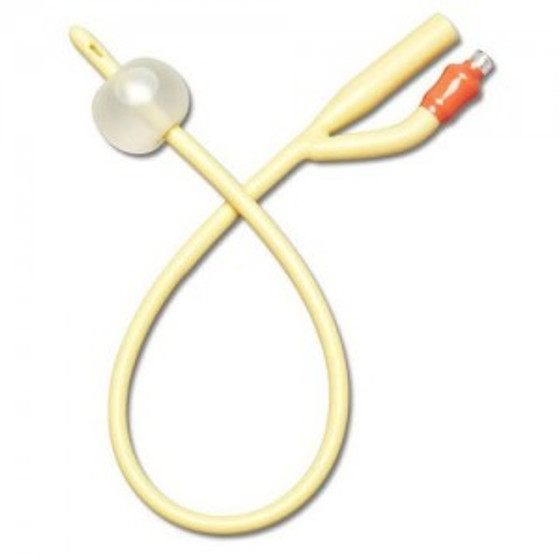

Description
Lubricath® Hydrophilic Coating: The most prominent feature of this catheter is its proprietary Lubricath® coating. This hydrophilic (water-loving) polymer coating absorbs fluid, creating a slippery, lubricious surface. This minimizes friction and irritation to the urethral mucosa during insertion and removal, enhancing patient comfort and reducing trauma. The coating also helps to reduce the likelihood of encrustation.
Material: The catheter is constructed from latex with the aforementioned hydrophilic polymer coating. It is important to note that this product contains latex, making it unsuitable for patients with latex allergies.
2-Way Design: The "2-way" designation indicates that the catheter has two channels or lumens. One channel is for the drainage of urine from the bladder, and the second channel is used to inflate and deflate the retention balloon with sterile water.
Size and Balloon Volume:
French Size (Fr): The 0165L24 model has a diameter of 24 Fr, which refers to the outer circumference of the catheter.
Balloon Volume: It features a 5 cc retention balloon. Once the catheter is inserted into the bladder, this balloon is inflated to hold the catheter securely in place.
Standard Tip: This model comes with a standard, rounded tip for general-purpose catheterization.
Sterility and Single-Use: The Bard 0165L24 is supplied as a sterile, single-use medical device to prevent infections and ensure patient safety.
The primary application for the Bard 0165L24 is as an indwelling urinary catheter. It is used in a variety of clinical settings, including hospitals, long-term care facilities, and home care, for patients who are unable to urinate on their own or require continuous bladder drainage. Specific uses include:
Urinary Retention: To drain the bladder in patients who are unable to void naturally due to conditions such as an enlarged prostate, nerve damage, or certain medications.
Surgical Procedures: Used before, during, and after surgery to keep the bladder empty, monitor urine output, and prevent urinary retention.
Incontinence Management: In some cases, it may be used for the management of severe urinary incontinence, although it is not typically the first-line treatment.
Monitoring Urine Output: For critically ill patients, an indwelling catheter allows for precise measurement of urine output, which is a key indicator of kidney function and fluid balance.
Bladder Irrigation: The 2-way design allows for the instillation of fluids to irrigate the bladder if necessary, although a 3-way catheter is more commonly used for continuous irrigation.