


Call Us
888.433.2300




Description
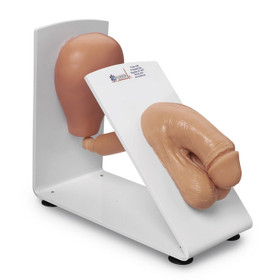
Realistic Anatomy: The model is an anatomically correct representation of a male's external genitalia, urethra, and bladder. The lifelike feel of the tissues allows for accurate training in catheterization techniques.
Practice Catheterization: The model is specifically designed for the practice of urinary catheterization, allowing students to learn the correct technique, from prepping the area to inserting and advancing the catheter into the bladder.
Realistic Resistance: The model provides realistic resistance at key anatomical points, such as the sphincter, giving students a lifelike experience. When the catheter enters the bladder, a simulated fluid will flow, providing immediate confirmation of a successful procedure.
Durable and Portable: The model is made from a durable material designed for continuous use in labs or clinics. It's a single unit that is easy to handle and can be used on a table, in a classroom, or in a clinical setting.
Educational Tool: The model can be used in conjunction with educational materials to provide a comprehensive learning experience.
The Male Catheterization Training Model is used in healthcare education and clinical settings to:
Teach Urological Procedures: It provides a hands-on platform for instructors to teach and demonstrate the correct techniques for male urinary catheterization, ensuring students are proficient before working with live patients.
Improve Procedural Skills: By allowing students to practice this procedure, it helps them build confidence and proficiency in a safe, low-stakes environment.
Enhance Patient Education: In a clinical setting, healthcare professionals can use the model to visually explain the procedure to patients, which promotes patient education and empowerment.
Support Self-Paced Learning: Because it's a standalone unit, it can be used for individual, self-paced practice, allowing students to train on their own schedule without direct instructor supervision.