

Call Us
888.433.2300



Description
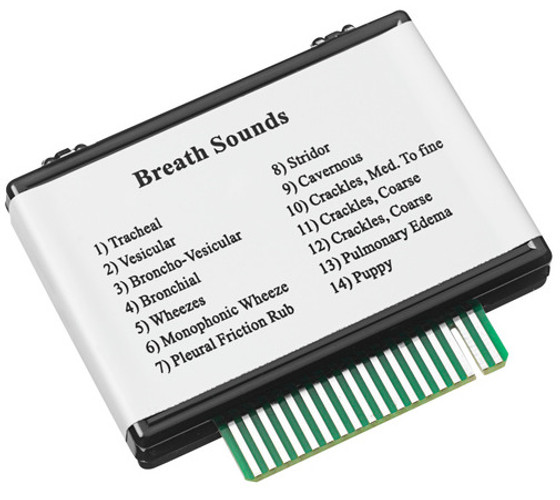
Software Cartridge: This product is a small, portable software module that plugs into a compatible simulator unit, such as the Mini Sounds TUTOR. The product code "WPL5096" is associated with the sound menu, while the "Ms2M-155" is the specific sound content designation.
Realistic Pediatric Sounds: The module contains a library of pre-recorded, authentic heart and breath sounds from an actual child. This allows students to listen to and learn to identify a variety of normal and abnormal sounds that are specific to a pediatric patient.
Interactive Simulation: When used with the main simulator unit, this menu allows an instructor to select and play specific pediatric heart or breath sounds. A connected electronic stethoscope is then used by the student to auscultate the sounds on a manikin or directly from an external sounder.
Anatomical Accuracy: The sounds are played through a sounder that can be placed on a manikin at the correct anatomical location, ensuring students learn proper stethoscope placement and technique for pediatric auscultation.
Targeted Training: The product's focus on a combination of pediatric breath and heart sounds makes it a comprehensive training tool, allowing instructors to conduct dedicated pediatric training sessions.
Scalability: The system is designed to allow multiple students to auscultate the same sound simultaneously, making it suitable for group training sessions in a classroom or lab.
Pediatric Auscultation Training: The primary use is in medical, nursing, and EMT schools to teach students how to accurately auscultate and identify sounds in a pediatric patient. This is a critical skill, as the sounds of a child differ from an adult's.
Diagnostic Skills: The product allows students to practice their diagnostic reasoning skills by listening to the sounds and correlating them with potential pediatric conditions, such as respiratory distress or a specific heart murmur.
Standardized Learning: By using a standardized set of sounds, the simulator ensures that all students receive a consistent training experience, which is crucial for consistent and objective evaluation.
Scenario-Based Education: An instructor can use this menu to create a scenario where a simulated child has a specific set of symptoms, and the student must use auscultation to help make a diagnosis.