


Call Us
888.433.2300

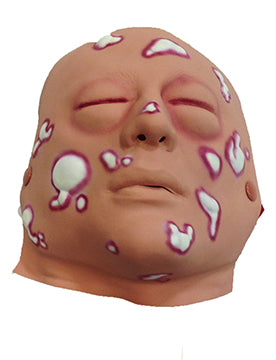

Description
Realistic Wound Replica: The prosthetic is a three-dimensional replica of a mustard gas burn, which is a vesicant, or blistering, agent. It is made from a lifelike, durable material that mimics the feel and appearance of human tissue. The appearance of mustard gas burns can range from redness and swelling to severe blistering and ulceration.
Graphic Realism: This realism is crucial for a true-to-life training experience, as it helps to prepare students for the emotional and physical reality of a traumatic incident.
Easy Application: The prosthetic can be easily attached to a manikin or a human actor's body using an adhesive. It can be further enhanced with makeup and simulated fluids to create a complete and realistic wound.
Durable and Reusable: The prosthetic is made from a durable material that is designed to withstand repeated use in a medical training environment.
Anatomical Accuracy: The prosthetic is designed to fit the contours of the body, ensuring that the burn appears anatomically correct.
The Mustard Gas Moulage is used in a wide range of emergency training settings to:
Enhance Training Realism: It is an ideal tool for creating high-fidelity, visually shocking scenarios that prepare students and professionals for the emotional and physical reality of a traumatic incident.
Train in Burn Assessment and Care: The prosthetic is essential for training military and tactical first responders in protocols for burn assessment and care, particularly for chemical burns.
Develop Assessment Skills: By creating a realistic injury, the prosthetic challenges students to perform thorough patient assessments and prioritize care based on the severity of the wounds.
Facilitate Trauma Simulations: The prosthetic can be used to set up complex trauma simulations, helping healthcare teams improve communication, coordination, and rapid decision-making in a high-stakes environment.
Support Hands-on Learning: The realistic look and feel of the wounds ensure that students get accurate, hands-on experience, which is crucial for building confidence and competency in performing life-saving interventions.