


Call Us
888.433.2300


Description
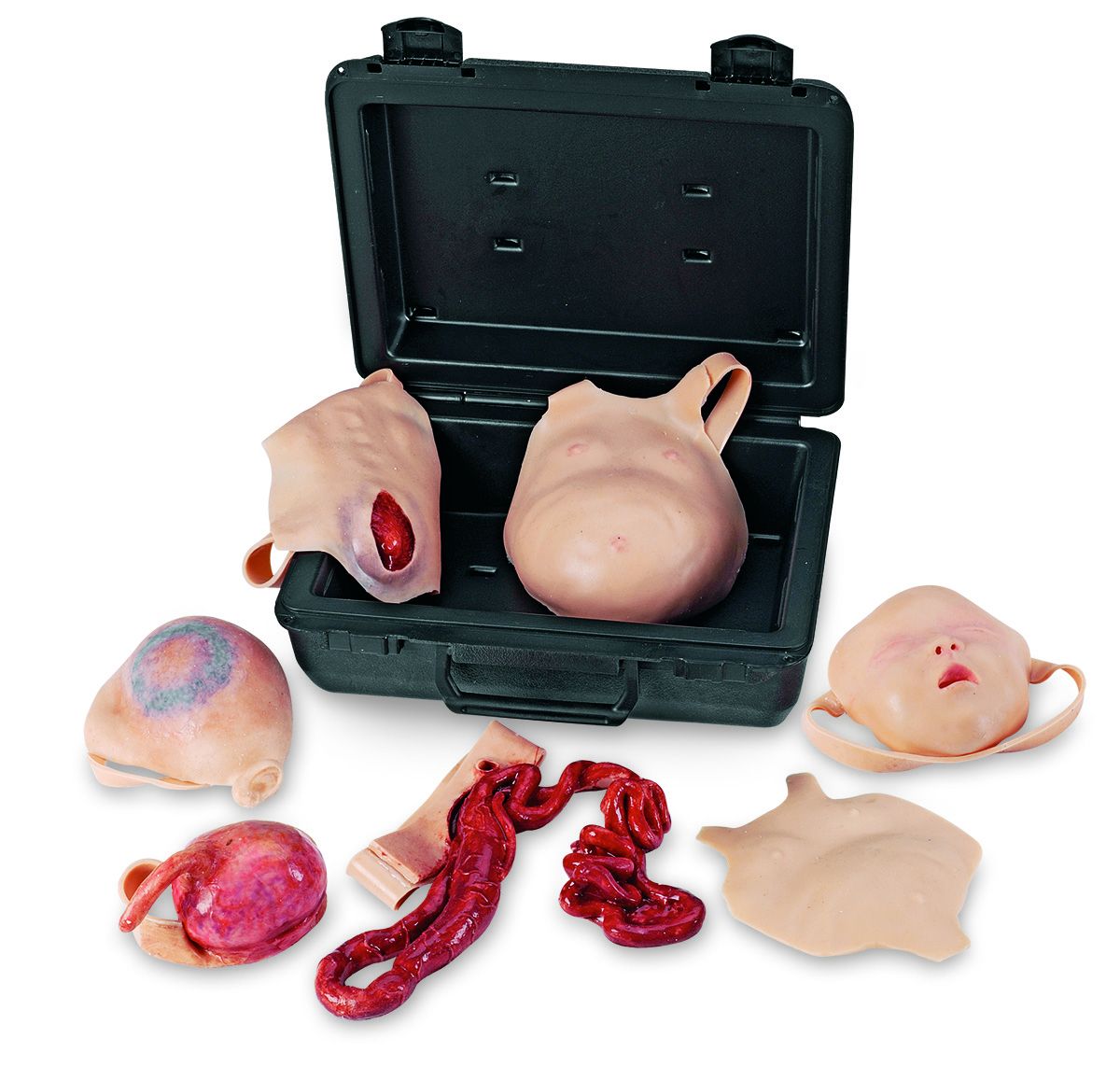
Extensive Wound Replicas: The kit includes a variety of wound prosthetics designed to mimic different neonatal anomalies. These may include:
Abdominal distention (gross and moderate)
Gastroschisis (an abdominal wall defect)
Myelomeningocele (a type of spina bifida)
Omphalocele (an abdominal wall defect)
Slack face wound
Subgaleal hemorrhage
Realistic Materials: The prosthetics are made from lifelike, durable materials that can be attached to a newborn manikin. The kit also contains other materials to blend the wounds seamlessly.
Reusable and Portable: Many components of the kit are reusable, making it a cost-effective solution for a simulation program. The entire set comes in a durable carry case, allowing instructors to easily transport it to various training locations.
Compatibility: The kit is specifically designed to be used on any newborn manikin, though some wounds are designed to fit the Gaumard HAL baby specifically.
Educational Focus: The wounds coincide with the S.T.A.B.L.E. program, which stands for Sugar, Temperature, Airway, Blood pressure, Lab work, and Emotional Support.
The Simulaids Neonatal Wound Kit is used in a wide range of emergency training settings to:
Enhance Training Realism: It is an ideal tool for creating high-fidelity, visually shocking scenarios that prepare students and professionals for the emotional and physical reality of a traumatic incident.
Train in Neonatal Care: The kit is essential for training healthcare professionals in protocols for identifying and managing major neonatal complications.
Develop Assessment Skills: By creating a variety of realistic anomalies, the set challenges students to perform thorough patient assessments and prioritize care based on the severity of the wounds.
Facilitate Trauma Simulations: The kit can be used to set up complex trauma simulations, helping healthcare teams improve communication, coordination, and rapid decision-making in a high-stakes environment.
Support Hands-on Learning: The realistic look and feel of the wounds ensure that students get accurate, hands-on experience, which is crucial for building confidence and competency in performing life-saving interventions.