

Call Us
888.433.2300



Exela Pharma Sciences

Description
Active Ingredient: Sodium Bicarbonate (): A potent alkalizing agent that dissociates into sodium (Na+) and bicarbonate (HCO3−) ions in the body.
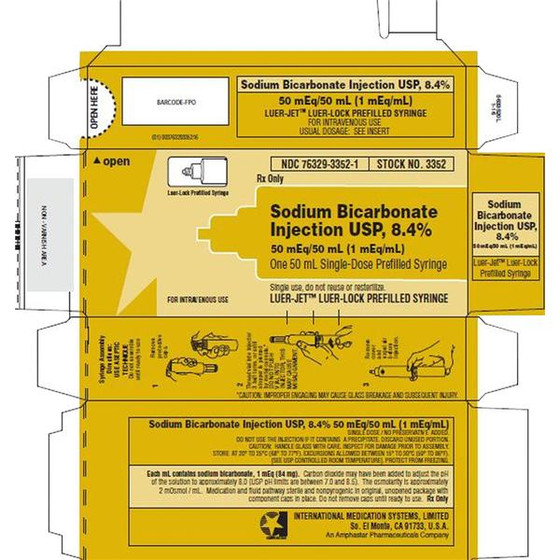
Concentration: 8.4%, which translates to 1 mEq (milliequivalent) of sodium bicarbonate per milliliter (1 mEq/mL). This is a highly concentrated solution, delivering 50 mEq of sodium bicarbonate in a 50 mL vial.
Volume: 50 mL per single-dose glass flip-top vial. This larger volume is suitable for situations requiring rapid and significant bicarbonate administration.
Preservative Free: This formulation does not contain any preservatives, which is crucial for intravenous administration and prevents potential adverse reactions associated with preservatives.
Sterile and Nonpyrogenic: Ensures the solution is free from microorganisms and fever-producing substances.
Hypertonic Solution: Its high concentration of solutes makes it hypertonic, meaning it has a higher osmolarity than human blood (approximately 2000 mOsmol/L). This property is important to consider during administration, as rapid infusion can lead to fluid shifts.
pH: The solution generally has an approximate pH of 8.0 (ranging from 7.0 to 8.5).
Single-Dose Vial: Designed for single use; any unused portion must be discarded to maintain sterility.
Treatment of Metabolic Acidosis: Its primary indication is for the treatment of metabolic acidosis, which can arise from various severe conditions, including:
Severe renal disease (kidney failure)
Uncontrolled diabetes (diabetic ketoacidosis)
Circulatory insufficiency due to shock or severe dehydration
Extracorporeal circulation of blood (e.g., during cardiopulmonary bypass)
Cardiac arrest
Severe primary lactic acidosis
Severe diarrhea (which can lead to significant bicarbonate loss)
Certain Drug Intoxications: Used in the treatment of specific drug intoxications, such as:
Barbiturate poisoning (to promote dissociation of the barbiturate-protein complex)
Salicylate (aspirin) poisoning
Methyl alcohol poisoning
Alkalinization of Urine: In hemolytic reactions, it can be used to alkalinize the urine to diminish the nephrotoxicity (kidney damage) of certain substances.
Cardiac Arrest Management: A key component in advanced cardiac life support (ACLS) protocols for managing severe acidosis during cardiac arrest, although its use is specific and guided by blood gas analysis.
Adjunctive Therapy: Used as an adjunct to other therapies to restore acid-base balance and support physiological functions during critical illness.