

Call Us
888.433.2300



Description
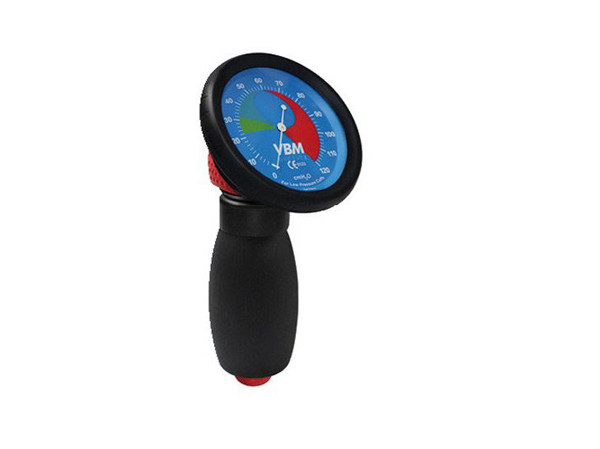
Analog Manometer: It is a mechanical, battery-free device with a large, easy-to-read 68 mm analog dial.
Universal, Color-Coded Dial: The "Universal" name refers to its dial, which has two distinct green, color-coded zones to indicate the safe pressure ranges for two different types of airways:
Tracheal Tubes (ET Tubes): One zone marks the safe range for endotracheal tubes (typically 22-32 cmH₂O).
Supraglottic Airways: A second zone marks the safe range for laryngeal tubes and laryngeal masks (typically up to 60 cmH₂O).
Full Pressure Range: The gauge measures pressures from 0-120 cmH₂O.
Precise Pressure Control:
Inflation: An ergonomic squeeze bulb is used to inflate the cuff.
Pressure Release: A red, thumb-operated release valve allows for fine-tuning and gradual pressure release.
Vacuum Valve: The inflation bulb features an integrated vacuum valve, which allows the user to actively and completely deflate the cuff by squeezing the bulb.
Luer Connection: It uses a standard Luer connection to attach to the pilot balloon of the airway device.
Fixation Hook: The device includes a hook on the back, allowing it to be hung from a standard rail or IV pole.
Connecting Tube: It is typically supplied with a 100 cm (40-inch) connecting tube.
The sole purpose of this device is the management of cuff pressure in intubated patients to ensure patient safety and prevent serious complications.
Inflating Airway Cuffs: Used to inflate the cuffs of endotracheal tubes (ET tubes) and supraglottic airway devices (like laryngeal masks or laryngeal tubes) to the correct pressure.
Monitoring & Adjusting Pressure: Clinicians use it for routine checks to ensure the cuff pressure remains within the safe, therapeutic range.
Preventing Cuff Over-Inflation: This is a critical use. Excessive pressure can cut off blood flow to the tracheal mucosa, leading to:
Sore throat and hoarseness
Tracheal ischemia (tissue death)
Tracheal stenosis (narrowing of the windpipe)
Tracheoesophageal fistula (a hole between the trachea and esophagus)
Preventing Cuff Under-Inflation: This is equally critical. If the pressure is too low, the cuff will not create a proper seal, which can lead to:
Micro-aspiration: The leakage of secretions from the mouth and stomach past the cuff and into the lungs.
Ventilator-Associated Pneumonia (VAP): A severe lung infection directly caused by this micro-aspiration.
Complete Deflation: The vacuum valve is used to ensure the cuff is completely empty before extubating (removing) the airway, which prevents injury to the vocal cords and trachea.