


Call Us
888.433.2300



Description
12-Lead ECG Simulation: The system's core feature is its ability to generate realistic 12-lead ECG waveforms and a wide range of arrhythmia scenarios. It can simulate various cardiac conditions, including:
Defibrillation Rhythms: Ventricular fibrillation (V. Fib), ventricular tachycardia (V. Tach), asystole, atrial fibrillation (A. Fib), atrial flutter (A. Flutter), and more.
Pacing Rhythms: Sinus bradycardia, various degrees of A-V block, and other slow heart rhythms.
ST Segment and T-wave Abnormalities: It can generate ECG changes indicative of conditions like myocardial infarction (MI) and ST elevation, providing a comprehensive training platform for ECG interpretation.
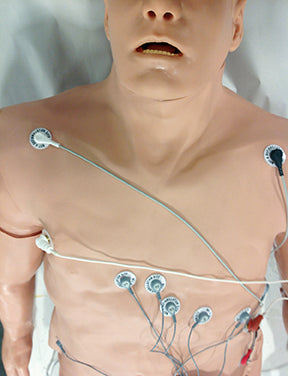
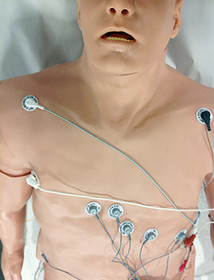
Manikin Overlay: The "large manikin overlay" is a realistic chest overlay that is placed on a compatible medium or large-sized manikin. This overlay has 10 ECG snaps, allowing students to practice proper 12-lead electrode placement and connection.
Interactive Defibrillation and Pacing: The system allows for trainees to pace and defibrillate directly on the overlay using a manual, semi-automatic, or automatic defibrillator. The ECG simulator responds to the shock, allowing students to see the rhythm change and providing immediate feedback. The system can also simulate electrical capture with an external pacer.
Durability and Compatibility: The overlay is made from durable materials suitable for repeated clinical practice. It is designed to work with Zoll defibrillators and is also compatible with a wide range of manikins.
User-Friendly Indicators: The simulator features LED indicators for pacer pulse detection, defibrillation discharge detection, and low battery, which helps guide the training process.
Warranty: The product comes with a three-year manufacturer's warranty.
The Zoll 12-Lead Arrhythmia Simulator is an invaluable tool for:
Advanced Cardiac Life Support (ACLS) Training: It is primarily used in ACLS and other advanced courses for healthcare providers, such as paramedics, EMTs, and nurses, who need to be proficient in ECG interpretation, defibrillation, and cardiac pacing.
Medical and Nursing Education: It is an essential component in medical and nursing schools for teaching students to recognize a wide range of cardiac arrhythmias and respond appropriately in a controlled, realistic environment.
Simulation-Based Training: Instructors can use this system to create complex, high-stress cardiac emergency scenarios to challenge trainees' critical thinking and decision-making skills.